Can Leptin Resistance Be Suppressed By Removing Aldehydes?
The hormone leptin is produced by fat cells and is known to normally reduce the need to eat. In obese individuals, however, this mechanism does not work properly. They have higher leptin levels yet still consume more food than necessary. This condition is called leptin resistance; the body simply does not respond to leptin's signal, the signal that sufficient fuel is stored in the body.
It appears that this condition is closely linked to improper protein/enzyme folding and to endoplasmic reticulum stress (ER stress), which is where enzymes are created and folded within the cell. What substances can trigger such stress? How about aldehydes formed by the autooxidation of linoleic acid? Could it be 4-hydroxy-2-nonenal (HNE)? Would activating the enzyme that breaks down HNE, namely aldehyde dehydrogenase (ALDH2), help? Would this also work to reduce leptin resistance?
Perhaps the most serious effect of the increased presence of the toxic aldehyde HNE, derived by the autooxidation of linoleic acid, is its attachment (adduction) to certain important enzymes within the cell. In this way, the compound slows down or even stops their activity despite their presence. This is known as a post-translational modification. The cell receives a signal, produces the corresponding amino acid sequence, but either fails to fold it into a functional enzyme or something prevents the enzyme from functioning properly.
Let's go through one study that does not connect leptin resistance with HNE at all, yet identifies ALDH2 as the main mediator of the beneficial effects. The study uses flurbiprofen, a common medication for sore throat pain, to activate ALDH2. It turns out that its administration corrects enzyme folding, including the folding of the leptin receptor.

As I wrote previously, other studies have already shown that flurbiprofen activates ALDH2 and improves the safe oxidation of aldehydes into carboxylic acids. For example, it converts acetaldehyde into acetic acid during alcohol consumption. It also converts HNE into HNA (4-hydroxy-2-nonenoic acid). We know that activation of ALDH2 by hydrogen sulfide restores cellular metabolism blocked by HNE molecules. We also know that small doses of alcohol, apparently by activating the enzyme ALDH2, have a similar effect in mice. The observed effect could therefore also be the result of removing toxic products of linoleic acid autooxidation.

Let's look at the time course of flurbiprofen's effects as a function of dosage; for this, we will use another study. Flurbiprofen activates ALDH2, which among other things leads to reduced alcohol intake in mice. The authors examined the effects of different doses of flurbiprofen on alcohol consumption, and the results are very interesting.

The graph clearly shows that even the lowest dose of 2.5 mg/kg/day had a relatively long-lasting effect, whereas the higher dose of 10 mg/kg/day shortened the duration of the effect. This therefore appears to involve post-translational modification of enzymes such as ALDH2. It may be related to the fact that a lower dose of flurbiprofen "cleans" ALDH2 of HNE, after which HNE and other aldehydes continue to be broken down fairly efficiently for several days, until ALDH2 function becomes suppressed again, linoleic acid autooxidation increases, and HNE levels rise once more.

It has been quite some time since I wrote a post discussing the potential effects of ALDH2 activation against Alzheimer's disease. Among other functions, ALDH2 also breaks down acetaldehyde produced from alcohol. Substances capable of activating it reduce the risk of toxic effects caused by aldehydes generated during linoleic acid peroxidation. This applies both to aldehydes obtained through dietary intake and to those produced endogenously within our bodies.

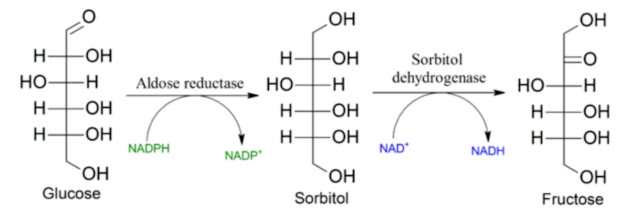
I do not understand why there are no human studies and only a limited number of animal studies. Activation of the ALDH2 enzyme appears to me to be a broadly beneficial detoxification strategy that prevents activation of aldose reductase (AR), the polyol pathway, and the development of excessive oxidative stress. Results from in vitro studies suggest that the negative effects of elevated glucose levels are actually driven by aldehyde-induced activation of the polyol pathway. It does not matter whether the aldehydes originate from alcohol consumption or from the autooxidation products of linoleic acid. They produce the same outcome: liver damage. If activation of ALDH2 by flurbiprofen helped restore proper mechanisms and liver function, then flurbiprofen could prove to be a very interesting drug with an already well-established safety profile.
Addition:
It turns out that ALDH2 plays an irreplaceable role in the regulatory loop triggered by increased H2O2 production during fat burning. Hydrogen peroxide activates the release of linoleic acid from phospholipids (cardiolipin) by the enzyme iPLA2γ, and aldehyde HNE is then produced by autooxidation of linoleic acid. This is apparently a very important part of the regulation of oxidative stress, because in the presence of ALDH2 it is converted to HNA acid and mitochondrial uncoupling is activated even in the absence of UCP1/UCP2 proteins. Only 4-hyroxy-2-nonenoic acid is needed for this. Consequently, the potential on the inner mitochondrial membrane is reduced, and the mitochondria are thus protected from overload by too rapid burning of fatty acids, such as linoleic acid. However, if ALDH2 activity is insufficient, for example in the absence of hydrogen sulfide (H2S), which protects this enzyme from the effects of HNE, LA is depleted from cardiolipin, resulting in increased oxidative stress and damage to the mitochondria. However, HNE itself does not act as an activator of uncoupling; ALDH2 activity is absolutely necessary for mitochondrial protection.
References:
Possible Prevention of Alzheimer’s Disease by Aldehyde Dehydrogenase
ALDH2 Protects Against Hypoxia-Induced Pulmonary Hypertension
Post-translational modifications of mitochondrial aldehyde dehydrogenase and biomedical implications


Comments
Post a Comment