Monitor the Rate of Processes—Fast Does Not Mean Safe!
Today it will be more of a summary, a more general reflection. In one of my recent posts, I commented on a study that quite clearly showed that if we remove the regulatory processes limiting the rate of fat burning, then the rate of burning is suppressed only after mitochondrial damage, loss of cardiolipin, loss of the necessary phospholipids, simply through oxidative stress. It is not a good idea to switch off regulatory mechanisms and think that things will be better without regulation—they will not.

If researchers try to switch mice or rats to a high-fat diet, they almost always damage their mitochondria. We now know that they will probably deprive them of sufficient cardiolipin, a phospholipid necessary for the proper functioning of the enzymes that produce cellular energy in the form of ATP molecules. We also know that this can be prevented by a different composition of fats, for example if the diet contains fish oil, or if it contains MCT oils, or if it contains vinegar/acetate, mitochondrial damage can be prevented and the effect of a high-fat diet is greatly reduced.

In one of my posts, I showed that the development of obesity in animals is always linked to the rate at which food is consumed. If we apply some restriction, we can prevent obesity. Sometimes it is enough to simply use hard pellets instead of soft food. That alone leads to suppression of obesity. Or the animals have to earn their food; they simply have to perform some action in order to receive feed, which slows them down. Or we give them fat only for a certain limited period of time, and for the rest of the day they have to eat only low-fat pellets or nothing.

What do these experiments have in common? They limit the rate. It seems that focusing on the composition of the diet is not enough to understand the problem. We must also be interested in the rate at which animals consume food, how quickly it is processed in the stomach and intestines, how quickly it enters the bloodstream, how quickly it is stored, how quickly it enters the cell, how quickly it is burned, etc. It is precisely the rate that influences how much waste and toxins are produced in the process, what will need to be repaired, and what can no longer be repaired.
Rates—those are the real parameters to monitor.

While with carbohydrates we are able to influence the rate at which they enter the bloodstream through our behavior, portion size, and the structure of the food, it is not that easy with fats. Fats enter the circulation by two routes, through the liver (short- and medium-chain) and through the lymphatic system (long-chain fatty acids). We cannot influence the speed of the lymphatic system very much through the rate of consumption; slowing the entry into the mitochondria has to be done in another way.
 |
| Comparison of the burning rate of soybean (SO), olive (OO) and coconut (CO) oil in a liver cell |
It seems that some specific fatty acids cause a phenomenon similar to what switching off the regulation did in the study mentioned above. For example, linoleic fatty acid (LA) is initially burned so quickly that it essentially simulates switching off this limiting regulation and thereby causes a loss of cardiolipin. LA itself probably isn't harmful, but it must not be allowed to act at full strength, at full speed; it must not be a basic component of the diet for obtaining energy. Even in very small amounts, it benefits from being mixed with some other fats. With a relatively low-fat diet, a mixture of plant and animal fat (LS1, LS2) comes out best. Why? Can some fats slow down the burning of other fats? Apparently they can.

So, is it possible to mix a fuel blend of fats that will be safe? One that will limit the rate of fat burning, but only enough to make it sufficiently fast while still being safe for the mitochondria?
Actually, this entire blog is about exactly that. How to ensure safe and fast fat burning. It seems that the way to achieve this is either a mild restriction of the rate at which fatty acids enter the cell (fish oil does this), or a mild restriction of the entry of fatty acids into the mitochondria (mild activation of DNL), or slowing the breakdown of fatty acids into acetyl-CoA molecules (MCT oil, acetate, ethanol, slowing β-oxidation and reducing NAD+ consumption, which activates SIRT deacetylases), or some other way. In all cases, however, it is practically the same thing, i.e., preventing activation of the safety mechanism called cellular senescence or pseudohypoxia, which occurs after certain limits are exceeded. Simply not forcing the cell to activate stronger protection against danger—that is the whole point.
Why is obesity and diabetes still increasing at the present time? It looks like some kind of slow worldwide poisoning by environmental toxins. It is as if the limits have currently shifted downward, with the safety mechanisms being activated more frequently. It is probably caused by multiple things that surround us, that we eat and breathe, but it seems to have a lot to do with the missing activity of enzymes that produce H2S in cells from sulfur-containing amino acids. Probably the most evidence we have is for a substance called 4-hydroxy-2-nonenal (HNE). An aldehyde that is formed by the peroxidation of linoleic acid from seed oils.

If something is switching off our regulatory mechanism, it is precisely the deficiency of enzymatically produced H2S, which is needed for S-sulfhydration of enzymes. Who is taking it away from us? Studies show us that it is HNE. It is enough to increase the activity of the ALDH2 enzyme, which also removes mitochondrial HNE, and many processes normalize.

The rate of fat burning must therefore not exceed the threshold at which H2O2 triggers the release of LA from cardiolipin and initiates its peroxidation into HNE. It is necessary to ensure that ALDH2 activity is always sufficient to cover the detoxification of aldehydes. Along with ALDH2, the enzyme aldose reductase (AR) also participates in detoxification, but it also triggers inflammation and causes a further increase in oxidative stress. Thus, activation of AR is already part of the safety mechanism I wrote about above, which is not good to trigger. It is intended to serve only to correct acute problems, not to address long-term deficiencies in fat burning.
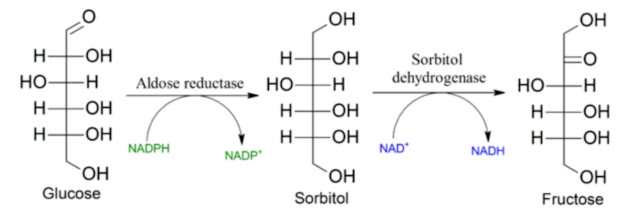
How can we shift the limits so that we reduce the risk of triggering this safety mechanism? It is absolutely clear that a functioning metabolism produces relatively little oxidative stress; the superoxide (O2-) that is produced is immediately deactivated by being converted to hydrogen peroxide (H2O2), which is then further converted into water by the antioxidant system. Therefore, the basic requirement is the best-possible functioning GSH/GSSG antioxidant system, including the NADPH cofactor and its recycling. Likewise, a high rate of aldehyde removal and high ALDH2 activity are important. Suppression of AR activity is also important for reducing inflammation and, in general, for protecting cells from elevated glucose levels after a meal and preventing activation of the polyol pathway. You really do not want to produce sorbitol and fructose in cells.

It seems that the composition of proteins also has an effect. An excess of sulfur-containing amino acids can be a problem. First, for the gut microbiome, which will produce too much H2S in the intestine and thereby force the cells of the intestinal wall to protect themselves through senescence, but it is not good for other cells either. The excess changes enzymatic pathways and H2S production is reduced. Also, an excess of nonessential amino acids, which prevents the conversion of essential amino acids into nonessential ones, interferes with proper amino acid metabolism. It seems that suppressed pyruvate carboxylase (PC) function and suppression of GNG in the liver together with activation of GNG in the kidneys play a role in this. This increases blood glucose and the risk of AR activation, and the risk of developing diabetes. A mild protein deficiency activates autophagy, the removal of unnecessary and dysfunctional enzymes and residues, and can have a very positive effect.
What can I add in conclusion? The rate of processes is usually not included among the main factors influencing metabolism, and that is a mistake! Our knowledge is quite incomplete so far, and we often draw incorrect conclusions from it. The processes we monitor are not linear; they have their limits. Changing the rate of processes changes the conditions under which the processes take place. For us, this may be precisely the difference between health and disease.
References:
are in the posts at the links


Comments
Post a Comment