Is Fat Burning Really Dangerous?
Recently, Georgi Dinkov commented on an interesting study on his blog, which shows that uncontrolled fat burning could damage mitochondria. Let's take a closer look at this study, considering all the facts known so far. Should we be afraid of fats or not?
We must first show the position of the study authors.
Quote
"Unrestrained fatty acid oxidation triggers heart failure in mice via cardiolipin loss and mitochondrial dysfunction"
"Collectively, these results indicate that although FAO is essential for cardiac energy production, therapeutic strategies aimed at stimulating cardiac FAO may be detrimental rather than beneficial in heart failure."
Unquote
So, can promoting fat burning really be harmful?
Well, we already know that promoting fat burning without overeating extends the life of mice. Cells need fat burning to improve resilience. So the scientists' statement about the dangers of promoting fat burning is contradictory to these findings, so something doesn't quite add up.
We need to realize that the method chosen by the researchers in this study disables a fundamental regulatory mechanism—it removes the regulation of fatty acid entry into mitochondria, the cell's "furnace" for burning fuel. Specifically, they eliminated the well-known enzyme ACC2. This enzyme produces malonyl-CoA molecules from acetyl-CoA molecules, and malonyl-CoA inhibits the enzyme CPT1, which is responsible for transporting long-chain fatty acids (LCFAs) into the mitochondria. We know how important proper phosphorylation of ACC2 by the AMPK kinase is. It is part of the cell's basic energy regulation. Therefore, if the ACC enzyme is completely removed, ACC can no longer be phosphorylated, and AMPK regulation cannot function. This is not a natural state, so we must be very cautious when evaluating the results. Nevertheless, that does not mean the results are not useful. On the contrary, they may confirm or refute some of our ideas about how these processes work.
This study is really about the quality of a special phospholipid called cardiolipin, which I have discussed before. It is composed mainly of linoleic acid (LA; C18:2n-6) and cis-vaccenic acid (CVA; C18:1n-7c).
Yes, this is THAT omega-6 linoleic acid that I claim is excessive above 4% of dietary calories and insufficient below 1.5%. Does this study support those conclusions? I believe it does.
First, let's look at how removing the regulation of fat burning (ACC dHKO) damages the heart.


So, eliminating ACC (ACC dHKO) clearly activates unrestricted fat burning (LCFA oxidation)—that much is obvious. We also see that markers of heart damage begin to appear at around four months of age in the mice, which is indeed very early.
This is caused by a deficiency of the primary material used to build cardiolipin—a deficiency of linoleic acid. How is that possible? Its dietary intake did not change. Is it simply being burned for energy? That seems like an obvious explanation, but apparently that is not the case because the LA content in triglycerides remained unchanged. Even increasing the amount of linoleic acid in the diet did not help. The only thing that helped was slowing down fat burning.
From the results and the graphs, it is quite clear that linoleic acid is missing from the membranes—from the phospholipids. Apparently, cardiolipin synthesis uses linoleic acid that is already incorporated into phospholipids located in cellular membranes. There is plenty of linoleic acid in triglycerides (TAG 18:2), so increasing dietary intake does not help.


At this point, you may ask yourself how linoleic acid is released from membrane phospholipids. Well, do you know? Careful readers of my blog certainly do, don't they?

Linoleic acid is released from the second position of phospholipids by the enzyme iPLA2γ. And this enzyme is activated by hydrogen peroxide. It is even probably released directly from cardiolipin. The authors of the study suspected a possible role for hydrogen peroxide and oxidative stress, but for some reason they interpreted the data as showing that reverse electron transport (RET) in the electron transport chain (ETC) was not responsible—which is true.

However, they overlooked the fact that hydrogen peroxide is also produced directly during fat oxidation. Fat burning always produces more H2O2 than burning glucose alone. That is why fat burning requires very strong antioxidant protection. In this case, mitochondrial membrane potential also increases, which always leads to greater H2O2 production. They even found that succinate supplementation reduces H2O2 production.
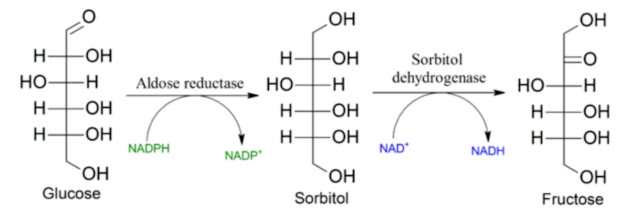
Therefore, I argue that the effect observed by the authors is the effect of direct H2O2 production in the ETC. This activated the iPLA2γ enzyme, released linoleic acid from membrane phospholipids and then either peroxidized it into other molecules (such as the aldehyde HNE) or burned it. This resulted in a shortage of linoleic acid available for cardiolipin synthesis. Without oxidative stress, this phenomenon would not occur. HNE further promotes oxidative stress by activating aldose reductase and suppressing ALDH2. Therefore, the cause of heart damage is not fat burning itself, but rather the absence of regulatory mechanisms capable of suppressing oxidative stress caused by overload.
We therefore do not need to share the authors' concerns about the harmfulness of burning fat for energy. Instead, we should investigate how to prevent activation of the iPLA2γ enzyme. How can we prevent its activation by oxidative stress? This enzyme functions as a safety mechanism—it is activated only under critical conditions, when H2O2 production exceeds a tolerable level. The cell then looks for solutions, such as activating cellular senescence. It reduces its metabolism and waits for the environment to change. Sometimes that change never comes, and the cell dies, which activates the immune system and inflammation. Disabling protective mechanisms is never a good solution.
Addition:
Why does linoleic acid (LA) need to be present in the diet in just the right amount?
A deficiency, i.e. below 1.5%, will not provide enough LA for the production of cardiolipin. But an excess of LA, i.e. its burning into ATP energy, will increase the production of H2O2, i.e. trigger the activity of the enzyme iPLA2γ and thus deplete membrane phospholipids of LA. There is then not enough raw material for the production of cardiolipins or even LA is released from cardiolipins. Mitochondria then cannot function properly.

Only an optimal amount of LA in the diet (approximately 2% of daily energy intake) will ensure healthy mitochondria.

Could a Deficiency of LA in Cardiolipin Be Caused by an Excess of LA?
References:


Comments
Post a Comment