How Does Oligosaccharide Fiber (FOS) Work?
So I was going through some older studies I had saved, and this one caught my attention. I don't remember seeing it at all, but it illustrates beautifully how deceptive things can be. What is it about?
Essentially, it is a study of how adding fiber (fructo-oligosaccharide, FOS) to the diet favorably affects metabolism. Perfect.
Opinions on fiber vary widely. My view is that fiber in the large intestine triggers signaling similar to overeating. The presence of undigested food in the large intestine signals that we have eaten more food than would have been necessary, and so the intestinal bacteria feed on it as well. What comes out of this is quite a lottery, because each of us has a different composition of bacteria in our gut, so we don't know what those bacteria will actually produce. If things turn out well, the bacteria produce acetate (and other short-chain fatty acids, SCFAs), and this signals to the body that there is indeed enough fuel, and the body adjusts accordingly. I have already written about this.


In this study, they approached it rather cleverly. It wasn't enough for them simply to find out that it works. They also investigated why it works for them. And the result is quite surprising, but wait for it.

First, they found that adding FOS to a diet based on fat (approx. 60%) and sugar (approx. 10%) improves basic parameters of glucose and fat metabolism; the mice retain insulin sensitivity and do not gain weight. The bacteria produce succinate from FOS. We have already mentioned it here several times as well. So they also tried supplementing succinate, with a similar result. I believe I have already mentioned here as well that succinate can be beneficial. But they did not stop there either and went further.

What does supplementing succinate to a diet based on fat and sugar do? Surprise! Gluconeogenesis is activated in intestinal cells, and glucose enters the liver through the portal vein. Continuously, over the long term. It enters not as a one-time bolus but as a constant supply throughout the entire day, 24/7. When they tried to switch it off (I-G6pc -/-), the positive effect disappeared.
What does that remind me of? Aha, I actually proposed this as a means of fighting hunger during a caloric deficit. A continuous small supply of glucose could help reduce hepatic gluconeogenesis and increase the amount of liver glycogen, thereby reducing hunger. At the same time, insulin would remain low enough for sufficient fatty acids to be released from fat cells and burned as energy to supplement the caloric deficit. That's what I wrote there. And here it really does work that way. Take a look. Although it is interesting that food intake actually increased.
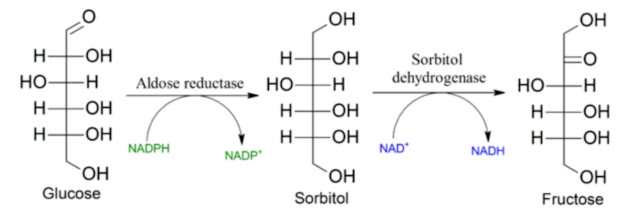
It can also be explained by saying that a continuous supply of glucose keeps the entire machinery for processing it active, and the polyol pathway (AR, aldose reductase) is never activated. The level of non-phosphorylated glucose in the cytosol of liver cells never rises high enough for fructose to start being produced in the liver. Oxidative stress does not increase to the point where excess HNE is produced through the autoxidation of linoleic acid released from membrane phospholipids. That's why it works; this is my explanation, not something stated in the study.
It therefore seems that we have a choice. We can either use the lottery system with fructo-oligosaccharides, or we can directly supplement small doses of glucose and vinegar throughout the entire day. Everyone can choose what works better for them. It should work.
References:
Microbiota-Produced Succinate Improves Glucose Homeostasis via Intestinal Gluconeogenesis


Comments
Post a Comment