Is Lard Missing Something Important?
Today we will look at how the composition of fats in a low-fat diet affects metabolism in mice, for example how it affects fatty liver development. The low-fat diet is an important factor here; the researchers did not overload the mice’s bodies, so in my opinion we are getting fairly relevant results.
So what does the study tell us?
We’ll take it slowly. There are six diets here: lard (L1, L2), soybean oil (S1, S2), and a mixture of lard and soybean oil (LS1, LS2), each with either 10% or 15% fat in the diet. For example, this is the difference in blood free fatty acid levels between diets containing 10% and 15% lard.

Isn’t that interesting? Such an ordinary low-fat diet. And if it contains 10% fat in the form of lard, it still works reasonably well. But if we increase the lard content by 50%, to 15%, the level of free fatty acids in the blood rises by about 75%. Clearly, something is not right here.
What happens if instead of pure lard we provide a mixture of lard and soybean oil in the diet? Again, the total fat content will be 10% and 15% of the diet.

Is it possible that lard is missing some essential component that prevents rapid fat burning or fat storage? We still do not know whether fat burning or fat storage is improving, but free fatty acids are rapidly processed when a mixture of fats is used.
What could it be? Hmm, vegetable fats contain more linoleic acid (53%), but lard also contains quite a lot of it (10%). So this is a change from 1.5% to 4.7%. That could be one of the factors, but let’s keep looking further.

Which fatty acids are completely absent from lard but present in soybean oil? From the composition, I came up with a few candidates: C22:0, behenic acid, and possibly also C22:1n9 and C24:0. These make up only about 0.5% of the fat, so it is a very small amount, but this may only be about signaling, about enzyme activation. Behenic acid activates peroxisomes, it activates PPARα. That could play a major role.

What else changes? Triglycerides and cholesterol. Yes, we can see that the unused free fatty acids (FFA) are processed and exported by the liver as triglycerides (TG) in VLDL particles. I would say my estimate was correct. Increased linoleic acid simultaneously suppresses the production of apoB100 molecules and cholesterol, thus slowing export and thereby increasing β-oxidation of fats, acetyl-CoA levels, gluconeogenesis, amino acid processing, and also glycogen formation in the liver.

For comparison, liver weight and liver fat are lowest precisely with the combination of lard and soybean oil. That means that in soybean oil something is missing or there is too much of something, don’t you think?
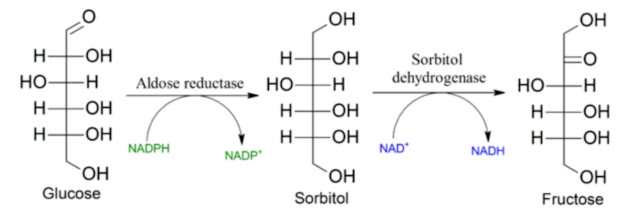
Soybean oil damages the liver; notice the high ALT and AST levels in the diet containing soybean oil without lard (red bars). Burning polyunsaturated fats weakens antioxidant protection, leaving more hydrogen peroxide, oxidative stress, these fats undergo peroxidation and produce aldehydes, which trigger aldose reductase, after which fats are stored in the liver. It seems that using a mixture with lard mitigates these effects.
As for body weight and liver weight, the content of linoleic acid (LA) in the diet is quite crucial. The result has the shape of a U-curve. A very low LA content (below 2%) is not very good, and a content above 4% is also bad.
Notice that at a dietary LA content of 5%, the presence of other fats, such as lard, no longer matters very much.

When comparing liver weights and body weights, they may appear comparable. As if the linoleic acid content determines weight. But they are achieved under completely different conditions. The metabolic state of the body is very different. This can be seen in the state of the liver enzymes.

What conclusion should we draw from this?
I think the best conclusion is that the diet should contain all possible fatty acids, meaning a rich mixture of fats, including for example triglycerides with very long-chain as well as short- and medium-chain fatty acids, conjugated polyunsaturated fatty acids (CLA), and so on. Only in this way can a safe and rapid fat metabolism be ensured in the long term, especially with a relatively low-fat diet.
It continues here.


Comments
Post a Comment