Is the reduction of cholesterol by vegetable oils actually caused by their peroxidation?
By chance, I looked at an older study from 2004, which shows that oxidative stress affects the export of fats from the liver in the form of VLDL particles. Imagine that each lipoprotein particle VLDL/LDL contains exactly one molecule of the ApoB100 protein, so they are absolutely essential for the export of fats from the liver. So we already have three essential products needed for successful fat export from the liver, i.e. oleic acid, H2O2, and ApoB100.
We obtain oleic acid from food or from saturated fats through the slow process of DNL. With a relatively low-fat diet, this is not a problem. Saturated fats, when in excess, also produce enough H2O2 to activate the enzymes synthesizing VLDL.
What about ApoB100? It is also easily produced. But the study tells us that there is a system that controls the quality of exported fats in VLDL particles. If peroxidized polyunsaturated fats are present, the enzymatic system PERPP degrades ApoB100 molecules and no VLDL particles can be exported, thus reducing fat export from the liver and increasing fat storage within it, i.e. fatty liver.
The relationship is inversely proportional and fairly linear: the more unsaturated bonds susceptible to peroxidation, the more peroxidized fats (TBARS), the lower the resulting number of usable ApoB100 molecules, with a few exceptions. Peroxidized linoleic acid (LNA) degrades ApoB100 the fastest, while saturated myristic acid (MA, C14:0) does so the slowest.

It is likely this very mechanism by which polyunsaturated vegetable oils reliably lower LDL-C cholesterol levels. This is a known effect that can essentially be used to track the amount of polyunsaturated oils in the diet in dietary studies.
Here we again arrive at the question of whether this is good or bad. Whether it benefits us or harms us. It is no longer so clear-cut, is it? If vegetable oils suppress fat export from the liver, we should be interested in how to reduce the amount of fat destined for export so that it does not accumulate in the liver. The normal response is an increase in the level of free fatty acids in the blood. This activates PPARα in the liver and PPARγ in adipose tissue to restore storage; if that does not help, high FFA levels cause an increase in gluconeogenesis, fasting glucose levels rise along with insulin—it is a pathway toward diabetes.
In the liver, PPARα activates beta-oxidation of fats, increasing levels of acetyl-CoA and H2O2. Acetyl-CoA activates the enzyme PC and gluconeogenesis (GNG). It is quite a simple regulation. If fats are successfully exported in VLDL particles, acetyl-CoA levels decrease and new glucose production decreases, and glucose is used more as an energy source. If export is halted—which can also occur due to unwillingness of adipose tissue to accept fats—higher FFA levels activate via PPARα fat metabolism in the liver, and acetyl-CoA activates the production of new glucose from glycerol released from adipose tissue. The switch is essentially the hepatic level of acetyl-CoA molecules and the level of free fatty acids, which activates transcription factors to produce the necessary enzymes.

So, have we just found the connection explaining why linoleic acid so strongly activates PPARα as well as PPARγ? Because it blocks VLDL export by removing the necessary ApoB100 through its own peroxidation? Is this an output quality control mechanism of VLDL that prevents the export of peroxidized lipids?
My hypothesis is simply that fats released as free fatty acids from adipose tissue need to be immediately burned or promptly repackaged in the liver into VLDL particles. If any FFA remain in the blood, it is a signal that something is not working quite right, and the body responds depending on which specific fatty acid is in excess.
If oleic acid (OA) is in excess, it itself activates storage into triglycerides and VLDL and subsequently into adipose tissue. Both PPARα and PPARγ are activated. DNL does not even need to be initiated; it is only necessary to activate GNG (we know that without OA, GNG does not start), i.e. the PC enzyme via increased acetyl-CoA, which enables triglyceride formation. Since OA is not burned very quickly, acetyl-CoA levels increase automatically when in excess.

If we compare the rates of oxidation of soybean (SO), olive (OO), and coconut (CO) oil in a liver cell, polyunsaturated fats outperform olive oil, and coconut oil is the slowest. Why is coconut oil the slowest? I would say that part of lauric acid C12:0 must first be modified by elongation and desaturation into oleic acid C18:1. This does not happen very quickly. Without oleic acid, nothing works. Oleic acid is optimal, but polyunsaturated C18 fats are faster!
Why? I think it is because glucose is also being burned at the same time. These fats do not sufficiently slow down glycolysis. There is too much NAD+, which is produced either by the activity of the enzyme DECR or by further elongation and additional desaturation of PUFA. This creates enormous demands on the antioxidant system, which can only withstand it for a limited time. Once antioxidant protection is depleted, peroxidized PUFA aldehydes begin to form. Only then does beta-oxidation slow down and glycolysis become restricted.
Let us look at the study that I have already discussed once here. I now have more knowledge and we can refine the commentary on how things are likely happening. The study is interesting because it uses the three oils mentioned above in two amounts, 7% and 21%, so we have data for six diets. In addition, we have two genetic variants of mice differing in PPARα expression (WT, PPARα KO).
The most interesting is olive oil, which is practically unaffected by PPARα deactivation and provides optimal results also in terms of intestinal barrier health and activation of LPS leakage into the bloodstream.
What does coconut oil do? At low concentration and with PPARα turned off (when GNG is also turned off), it behaves quite similarly to olive oil, because the low concentration allows sufficient production of oleic acid via DNL. However, this changes at higher content, where insufficient oleic acid limits VLDL export and fat storage in adipose tissue. This manifests as a lean phenotype. More must be burned, but certainly more is also stored in the liver.
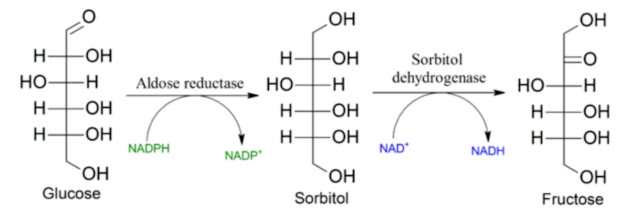
However, if PPARα remains functional, coconut oil stores a relatively large amount of fat in adipose tissue even with high insulin resistance. Although we know from other studies that it does not cause adipocyte senescence, it does activate intestinal permeability to endotoxins. It triggers a response resembling a bacterial infection. LPS activates lipolysis and rapid transformation of medium-chain fatty acids into long-chain ones suitable for storage. The effect of LPS endotoxin is likely to be through activation of PPARα, increasing H2O2 and activating the enzyme AR. Turning off PPARα strongly inhibits this effect. Gut permeability is essential in the case of coconut oil, but it can help trigger defense mechanisms in the case of bacterial infection.
Soybean oil in small amounts limits VLDL export and fat storage. This activates gluconeogenesis and reduces food intake. Antioxidant protection is still functioning well and isn't overloaded. Linoleic acid (LNA) in small amounts acts as a prevention of obesity! But at higher LNA intake, antioxidant protection fails, and 4-HNE aldehydes are produced and bind to enzymes. Hepatic GNG and VLDL export stop. Free fatty acids increase, and linoleic acid is directly stored in adipocytes as triglycerides because PPARγ is active. Limited hepatic GNG does not mean that glucose production is limited, for example, in the kidneys; fasting glucose will be high, and insufficient hepatic glycogen production will be compensated by overeating. Storage ceases to be controlled by the liver. But this does not happen immediately—it takes several weeks for the liver to be sufficiently damaged.
It appears that activation of PPARα is a very important protective process when burning polyunsaturated fats, especially at low intake. It activates peroxisomes and compensates for missing ROS by increasing H2O2 production. This triggers GNG and slows glycolysis; insulin sensitivity is also reduced via the JNK pathway. Small amounts of polyunsaturated oils are normal and do not cause problems. At high amounts, however, even activation of PPARα cannot protect the liver’s antioxidant system.

Notice in the previous figure how PPARα activates insulin resistance (P-IRS, insulin receptor sensitivity) by compensating for missing H2O2 production through peroxisome involvement and subsequent JNK pathway activation. While coconut oil does not require activation of PPARα—as we also see in the second graph in this post for lauric acid—the activation of the transcription factor PPARα is absolutely essential in the presence of polyunsaturated oils to limit glucose influx and reduce overload.
What metabolism of polyunsaturated fats would look like without activation of PPARα can be seen in the following figure (blue curve).

In reality, however, a small amount of PUFA is not harmful; on the contrary, it produces a healthy and lean phenotype, as seen in the next figure on the left. A soybean oil content of about 7% is probably the maximum that produces this healthy phenotype in mice while not yet damaging antioxidant protection or producing 4-HNE, which subsequently switches metabolism via activation of AR and suppression of SIRT2 and SIRT1. Could it be that this lean phenotype is caused precisely by reduced VLDL export?
Even a small amount of linoleic acid in the diet can strongly suppress VLDL production, and if other regulatory systems function properly, elevated gluconeogenesis and hepatic glycogen production will also reduce food intake. I believe this is what we see in the following figure on the left. Conversely, the figure on the right shows what happens when antioxidant protection is overwhelmed by high PUFA intake.

If we further consider that an increase in the number of VLDL/LDL particles is an essential part of the immune response to bacterial infection, we must conclude that polyunsaturated fats worsen our immunity at the very time we need it most. We must be very careful about which markers and at what time we consider beneficial or harmful. Forcing their decrease or increase can have unexpected consequences. It is simply not easy to determine what is beneficial and what is not.
References:


Comments
Post a Comment