Posts

Nitric oxide, tissue oxygenation and photobiomodulation, how are they related?
Image
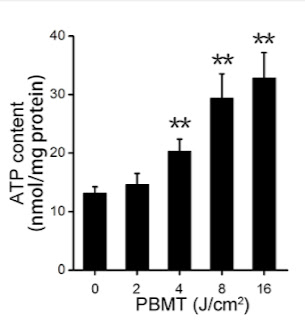
It is interesting how diverse the view of nitric oxide (NO) can be. In the first post , I took information from a researcher who saw only positives. Not even a hint of a balanced view, the voice of a salesman of NO-generating supplements. This view is given by focusing on only one function of NO, namely vasodilation. Although this is an important function, it is not the only one that NO performs. An excess of NO is quite destructive, it permanently modifies enzymes and damages the function of, for example, the nervous system, as I have already commented on . In this post, I take information from one article that deals with the investigation of photobiomodulation. It is a relatively new field, where the tissue is irradiated either with LED radiation or a laser, or perhaps just with a broad spectrum of the sun or a light bulb. There is a lot of ambiguity here and the mechanisms of how it all happens are not known in detail at all. The positive effects are known, but the reproducibility ...

Is nitric oxide (NO) the cause of autism?

Image
When I wrote in a previous post   that the cause of the suppressed ability to synthesize nitric oxide (NO) by the eNOS enzyme in our blood vessels in middle and old age could be its increased concentration in younger age, caused by insufficient exposure to ground-level ozone O3 in our surrounding environment, I had no idea that scientists had already begun to connect autism with an excess of NO. But we will look at this study later, first we will look at the statistics from Northern Ireland. Few countries have such well-processed data. I do not assume that the situation would be fundamentally different from, for example, the Czech Republic. The numbers are very alarming.  Nitric oxide as a cause of autism (ASD) Autism is characterized as a developmental disorder characterized by abnormal social interaction, constant repetitive patterns of behavior and impaired communication skills. The causes of autism are unknown, it is generally believed that a combination of genetic p...

Ozone and nitric oxide, how do they interact?

Image
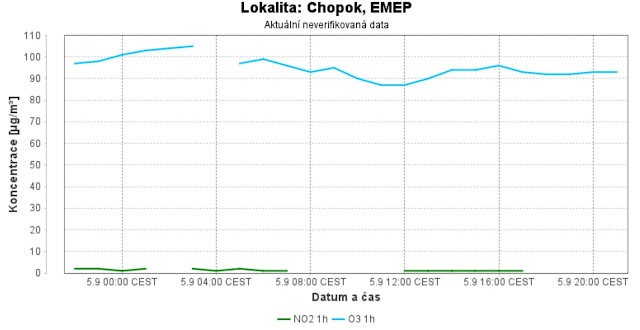
I already covered ozone in an older post. If you don't read it, l ook there first . Today I will try to supplement the previous considerations with the hypothesis of how ozone is formed in a clean outdoor environment. Fresh air in a clean outdoor environment unencumbered by emissions, far from traffic and industry, contains quite stable concentration, typically around 0.1 mg of ozone in one cubic meter. All day long, even at night when the sun doesn't shine. Human exposure to ozone over a 24-hour period is therefore much higher in a clean natural environment than in the vicinity of emission sources burning fossil fuels. There, the concentration of ozone drops sharply after sunset, sometimes below 0.02 mg/m3. The measured data clearly show this. Station on Mount Chopok in Slovakia on September 5, 2023, current measurement of O3 and NO2 in very clean nature Bardejov station in Slovakia on September 5, 2023, current measurement of O3 and NO2 in the urban environment. After sunse...

Nitric oxide, a miracle molecule that we will hear a lot about!

Image
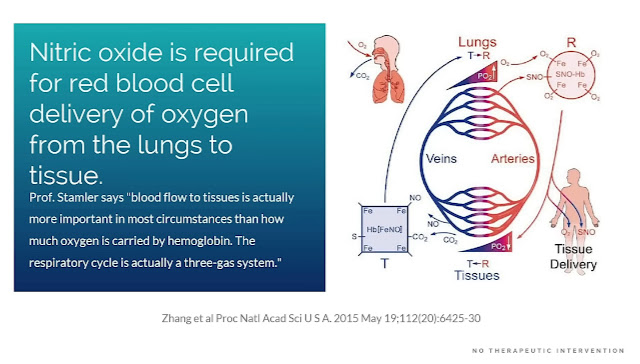
In this post, I would like to introduce you to one important online lecture , which summarizes many findings and basically the results of the investigation of such a simple molecule as NO, nitric oxide. It is a lecture authored by Dr. Nathan S. Bryan, Ph.D and is already from 2020, yet almost all of the information in it will probably be new and surprising to you. So right at the beginning Dr. Bryen learns about a study that shows that poor blood and oxygen supply is probably behind all chronic problems. Subsequently, he shows us that not only CO2 is necessary for the release of oxygen from the hemoglobin of red blood cells (Bohr effect), but that nitric oxide is also needed for this. This is a practically unknown function in addition to the already known vasodilation function, i.e. expansion and relaxation of the vascular muscles. Both CO2 and NO are required to release oxygen from hemoglobin. But NO also has other functions affecting not only the cardiovascular system, but also the ...

How to fight chronic inflammation and obesity? Try to breathe less and better!

Image
Breathing, probably one of the most important activities we perform. But at the same time, it is also an activity that we consciously neglect completely and we don't care at all how it goes and how we carry it out. We don't see it! Is it possible that the way you breathe could have a fundamental effect on health, on the development of chronic inflammation, on obesity, even on cancer? I don't know, but I'll try to make some observations here. Breathing beautifully completes the puzzle, which began to appear to me about a year ago in the post " Aging as progressive pseudohypoxia ?" and since then more and more posts have been directed towards the issue of oxygen deficiency and its signaling in the cell, in the tissue, in the body. Let's sum it up.  The problem starts with free radicals, almost everyone knows about them today, they are called ROS (Reactive Oxygen Species) for short and they are said to be evil, ugly and harmful molecules. So we deploy good, b...

Stop the CO2 producing enzymes in the fat cells and don't be surprised if you get fat!

Image
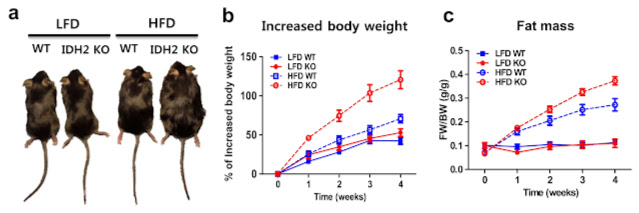
Today's post loosely follows on from the previous one , as it will again be about the mitochondrial glutathione antioxidant system, which is an integral part of the oxidative phosphorylation system, i.e. obtaining energy through combustion. The antioxidant system of the mitochondria converts the resulting hydrogen peroxide into exhaled CO2 and thus enables the cell to obtain and breathe oxygen. F at cannot be burned w ithout the antioxidant system that mediates this. It is also no coincidence that lack of oxygen is signaled by the increased production of hydrogen peroxide H2O2 in the mitochondria ,  it is part of the regulation of breathing. It's that simple, either you exhale carbon in the form of CO2, or you build it into your own body. There is no other possibility. Well, except for the ketogenic diet, where you exhale it as acetone and pee it out as ketones, but that's not what this post will be about. It's just that if you don't breathe out the carbon, it takes...

Omega-6 polyunsaturated fats disable the antioxidant system of the mitochondria and thus increase the level of hydrogen peroxide in the cell!

Image
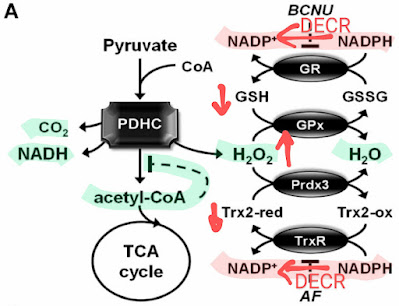
I  think the mechanism by which polyunsaturated fats increase the burden of oxidative stress in the cell has not yet been fully understood. Many people who recognize their toxicity are convinced that unoxidized oils are safe and non-toxic. However, scientific studies tell us that even pure polyunsaturated fats have a negative effect on metabolism, sometimes even with their supposedly "healthy" effects. We can mention, for example, the activation of gluconeogenesis , i.e. an increase in blood sugar, or the activation of the release of arachidonic acid from phospholipids and thus an increase in blood clotting, the activation of CB1 cannabinoid receptors , i.e. an increase in appetite , etc. It is therefore not only about the secondary products of autoxidation of these fats, which are clearly toxic . Burning of polyunsaturated fats (DECR) has a similar effect as deactivating the antioxidant chain with BCNU/AF. The pyruvate dehydrogenase complex (PDHC) is the main enzyme enabling...

Carbon dioxide against lack of oxygen!

Image
I like controversial topics, paradoxical situations where things seem clear at first glance, but in reality everything is the opposite. Everyone knows that carbon dioxide (CO2) is a waste gas from burning fats, proteins or carbohydrates. So it needs to be removed from the body properly and as quickly as possible and replaced with oxygen, right? Wrong. We need it for a very important barter. We need CO2 to buy oxygen from red blood cells, our tissues need it. If we don't have CO2, we don't get oxygen, molecule for molecule. Only CO2 will force hemoglobin to release oxygen. This simple rule has far-reaching consequences for our body. The level and production of carbon dioxide affects the availability of oxygen, and its deficiency will cause (pseudo)hypoxia, an apparent lack of oxygen, even when there will be enough oxygen in the blood. The problem is that the formation of CO2 in the TCA cycle is a separate chemical event independent of oxidation. If the TCA cycle is slowed or sto...

Lactate shuts down glucose oxidation via magnesium ions.

Image
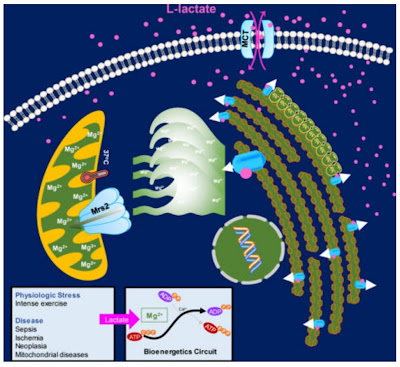
I have discussed here many times that I consider suppressed energy metabolism of cells to be the main problem related to diseases of civilization. They simply for whatever reason, and there may be many of them, operate in energy-saving mode and conserve whatever they can. So they gradually suppress the consumption of saturated fats and glucose and store them as fat. There are then only few options left to awaken the energy mechanisms and increase the metabolic rate.  If we use unsaturated fats to turn on peroxisomes , the entry of saturated fats into the mitochondria will be limited (via malonyl-CoA), carbohydrate burning in the mitochondria will also be limited (via phosphorylation of the PDH complex). Thus, for fuel processing, we are left with only peroxisomes processing unsaturated fats into acetate, and dicarboxylic acids, which ultimately produce succinate. In doing so, pyruvate will be converted to lactate in the peroxisomes . But glucose will compete in this, it will not be...