Is Hydrogen Sulfide Essential for Thermogenesis? How Is It Related to Omega-6 Fat Burning?
Do you often feel cold? Are you unable to warm up in a cooler environment? You may have a problem with hydrogen sulfide deficiency and with omega-6 fat metabolism.
This condition is usually attributed to insufficient thyroid function, inadequate hormone production. But as studies in mice show us, the problem may also lie elsewhere, possibly even in a deficiency of NADPH molecules. But I am getting ahead of myself.
How is thermogenesis in brown adipose tissue regulated in the first place? In one older post I pointed to a study in mice where, when they were placed in a cold environment, there was an increase in the production of succinic acid (succinate), which subsequently activated the formation of hydrogen peroxide, and this then triggered heat production by activating UCP1 proteins in brown adipose tissue.

It appears that hydrogen sulfide (H2S), produced enzymatically (that is, via the CSE/CTH enzyme), also plays a role somewhere along this pathway. I found a study showing how thermogenesis and body temperature in mice can be modulated using a CSE enzyme inhibitor (PPG75).
 |
| Metabolism of linoleic acid (C18:2n-6) |
Why was I interested in the pathway that triggers thermogenesis in brown adipose tissue? Because there is a very interesting phenomenon related to the metabolism of polyunsaturated oils with double bonds in even-numbered positions. I have also discussed this here before. This type of bond requires the enzyme 2,4-dienoyl-CoA reductase (DECR) for processing. This is the only enzyme in the fat-processing pathway that consumes NADPH. It can therefore contribute to the creation of NADPH deficiency and a deficiency of reduced glutathione (GSH). It thus lowers antioxidant protection, and burning PUFA over time usually increases oxidative stress.

If the DECR enzyme is blocked (Decr -/-, KO), nothing special happens under a normal carbohydrate mouse diet. But under a low-carbohydrate diet or during fasting, the concentration of free fatty acids in the blood increases, very significantly. These fatty acids would normally serve to generate heat in a cold environment, but brown adipose tissue simply does not function when the DECR enzyme is turned off. The cells of brown adipose tissue neither release their own stored fat nor process the available fat released from white adipose tissue. Brown adipose tissue refuses to produce heat. So in a cold environment, the mice’s body temperature drops significantly. The cause is not yet known; the authors of the study state that there must likely be another mechanism besides those they tested.

And it is precisely the missing H2S that appears to me to be that unknown mechanism. H2S production via the CSE enzyme is significantly suppressed by high levels of free fatty acids (FFAs) or glucose (HG) in the blood. As we already know, suppressing the activity of the DECR enzyme leads to a large increase in free fatty acid levels, which blocks H2S production and disconnects the pathway that triggers heat production in brown adipose tissue. Nothing else is required. The signal for heat production is initiated, but the pathway is interrupted and heat is not released.

Perhaps this also resolves the mysteries surrounding linoleic acid. It initially appears thermogenic, increasing thermogenesis in brown adipose tissue by raising oxidative stress, but only until antioxidant protection is depleted due to higher consumption of NADPH molecules. Then the recycling of antioxidant protectors, GSH molecules, is reduced. What happens next? Oxidative stress activates the auto-oxidation of linoleic acid molecules into 4-HNE molecules. These begin to stick to enzymes and slow their activity. H2S production decreases, the activity of the gluconeogenic enzyme PC decreases (its S-sulfhydration disappears). This further limits NADPH production via gluconeogenesis and the PPP pathway. Lack of NADPH will further reduce DECR activity, increase FFA levels, and the loop of S-sulfhydration limitation will be closed. Limitation of gluconeogenesis is a known effect of DECR enzyme blockade.
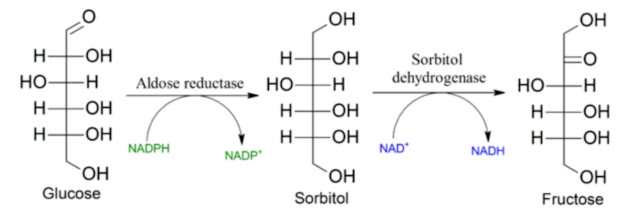
We already know how this manifests in brown adipose tissue: heat production is reduced. It likely also relates to the fact that older people, with higher levels of polyunsaturated fats in their membranes and higher oxidative stress in the body, unlike children, have impaired thermogenesis, do not develop fevers during infections, and generally feel colder; their enzymes are adducted with 4-HNE molecules and brown adipose tissue no longer produces enough heat. It seems that the mystery could thus be resolved in this way. Perhaps it is enough to restore the function of the CSE enzyme, restore H2S production, perhaps by activating the ALDH2 enzyme that degrades 4-HNE, possibly also by blocking the AR enzyme with glycine, or by supplementing with taurine.

References:


Comments
Post a Comment