Posts

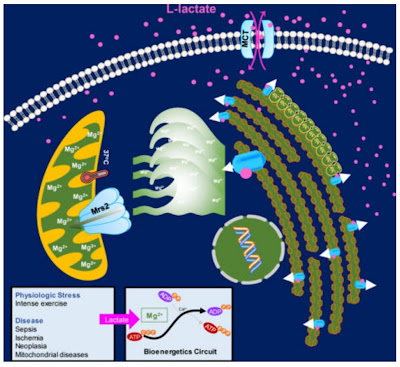
Lactate shuts down glucose oxidation via magnesium ions.
Image
I have discussed here many times that I consider suppressed energy metabolism of cells to be the main problem related to diseases of civilization. They simply for whatever reason, and there may be many of them, operate in energy-saving mode and conserve whatever they can. So they gradually suppress the consumption of saturated fats and glucose and store them as fat. There are then only few options left to awaken the energy mechanisms and increase the metabolic rate.  If we use unsaturated fats to turn on peroxisomes , the entry of saturated fats into the mitochondria will be limited (via malonyl-CoA), carbohydrate burning in the mitochondria will also be limited (via phosphorylation of the PDH complex). Thus, for fuel processing, we are left with only peroxisomes processing unsaturated fats into acetate, and dicarboxylic acids, which ultimately produce succinate. In doing so, pyruvate will be converted to lactate in the peroxisomes . But glucose will compete in this, it will not be...

How to get fat? Just plug in the peroxisomes!

Image
The epidemic of obesity and metabolic disorders is in full swing, only no one really knows why. If you look at old films or photographs, you will find very few people who are a bit overweight, even in affluent society. People ate what they wanted. Sugar consumption was on the rise, but it manifested itself more in rotten teeth than obesity. But today? Do you think that's been solved? Why, despite constant sports and weight training with a relatively high risk of injury or damage to some part of the body, the obesity curve in the population continues to rise. Where is the cause? Recently, a theory has emerged that the AhR receptor may be behind this. This receptor switches on when we eat and off after we eat. However, in obese people, this receptor never turns off. It has to do with the poisons in our food, e.g. dioxins reliably switch on this receptor. If you are interested, listen to the YouTube video series created and still being created by Brad Marshall. Maybe we'll look a...

Sugar prolongs the life of cells in the digestive tract, but it's probably not good !

Image
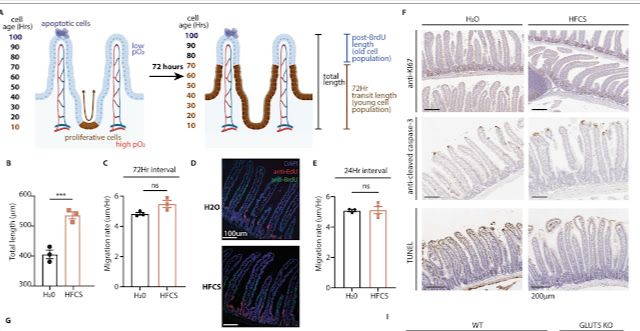
Whenever I add hypoxia to a search engine request for some metabolic connections, the search engine always comes up with something interesting.  As an example, this is the result of a search for a link between oxygen deficiency and sugar and fructose metabolism. Sugar or sucrose, a disaccharide composed of glucose and fructose, has interesting effects on the lifespan of cells lining the digestive system. I have discussed fructose and its effects here and here . Today, we'll look at an interesting study in mice that shows how fructose affects cell survival in relative oxygen deprivation, i.e. hypoxia. But presumably this is also true elsewhere in the body during pseudo-hypoxia caused by, for example, the auto-oxidation aldehyde products of polyunsaturated fats, i.e. MDA, 4-HNE or 9-ONA. We'll see that fructose is definitely involved as well. This also applies to high-fructose corn syrup (HFCS). This should have essentially the same properties as sugar, but there is information...

Insulin resistance is caused by a lack of hydrogen peroxide in the cell !

Image
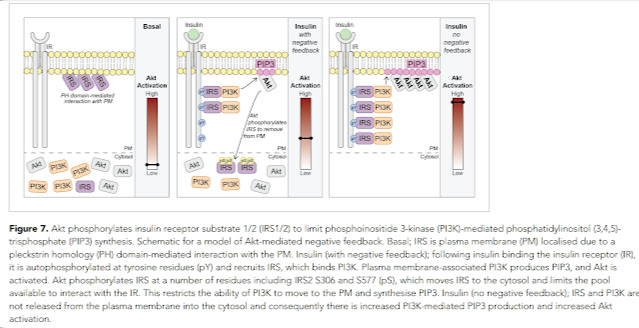
Hydrogen peroxide H2O2 increases phosphorylation (activation) and slows down dephosphorylation (deactivation) of the insulin receptor, thereby increases its sensitivity to insulin and reduces insulin resistance. Don't you believe it? But not only that, it also keeps the suppression of insulin receptor sensitivity working after it has encountered high insulin levels, so it may also maintain insulin resistance.  Let's take a closer look at this. We can't do it without the details from the scientific studies, but no worries. I'll try to make this idea of mine, which I think is heretical for now, understandable. In fact, I wrote a very similar explanation two years ago , only it lacked the adaptive mechanism of insulin receptors, which was unknown at the time.  Schematic of a negative feedback insulin receptor that functions as a signal compressor. L et's start  by first explaining what insulin is. It is a substance that allows the storage of energy reserves. When you e...

How are arterial calcification, atherosclerosis and aldehydes from oils related?

Image
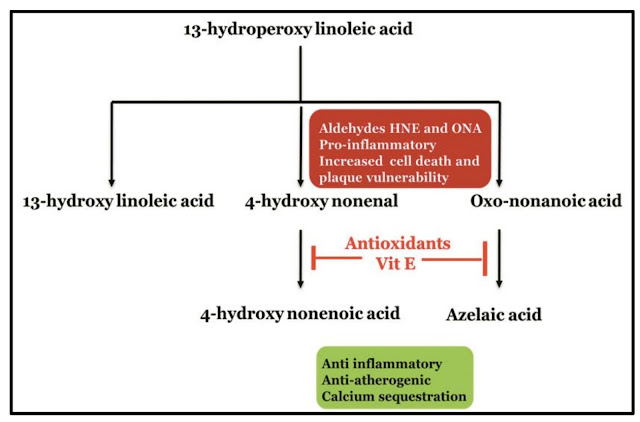
How long have we known that omega-6 self-oxidation products damage tissues, such as the liver? Long! A study from 1985 already investigated which components of spontaneous oxidation of linoleic acid are the most dangerous and what effects they have. And they identified it as the compound 9-ONA (9-oxononanoic acid). You will see below what it can do. Nevertheless, even after almost forty years, polyunsaturated table oils are officially promoted as very healthy foods, although it is true that frying has not been considered healthy for some time. However, spontaneous oxidation occurs even at relatively low temperatures, and oils are definitely not put in the refrigerator, so there will always be poisons in them. However, it is also true that oxidized dietary fats are apparently far more toxic to mice and lab rats than to humans . This is due to the much longer human digestive system. The majority of aldehydes, the so-called secondary products of spontaneous oxidation of linoleic acid, ar...

Aldehydes from cooking oils as causes of Alzheimer's disease (and obesity)?

Image
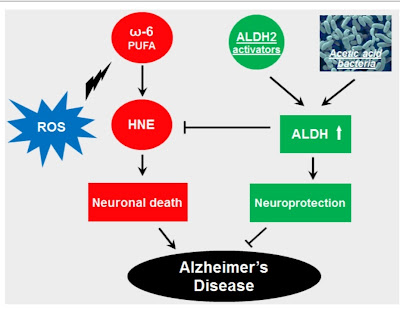
We already know aldehydes, they are poisons that arise from polyunsaturated oils either at high temperature (frying) or by (per)oxidation. The best known such substances are MDA (malondialdehyde) or HNE (4-hydroxy-2-nonenal). If we follow up on the previous post , oxalates from plant products such as spinach, beet, but also almond milk or sweet potatoes create an oxidizing environment in blood vessels with increased production of superoxide, thus perfectly supporting the oxidation of linoleic acid from table oils and other polyunsaturated acids, which themselves promote excessive production of hydrogen peroxide in peroxisomes. It is therefore a very dangerous combination of foods for blood vessels, it increases the oxidation of LDL and the formation of atherosclerosis and vascular plaque. Studies show us that HNE also causes vascular muscle hypertrophy, increasing pulmonary blood pressure and pulmonary fibrosis . Another studies suggest that HNE can also be behind nerve and brain damag...