Posts

What is cellular senescence? Could it be behind obesity, cardiovascular disease, or even Alzheimer's?

Image
I will try to summarize the latest findings as I have come to them from published studies, which strongly support my original idea that metabolic problems occur when a certain number of cells switch from oxidative to fermentative metabolism in tissues or cells that do not normally do this . These can be fat cells, liver cells, or supporting cells of the nervous system, but also cells of the bone marrow, the immune system, etc. A very wide range. In this blog, I have so far called this phenomenon pseudo-hypoxia, i.e. a state where a cell activates the same mechanisms as in a lack of oxygen, but in a situation where there is enough oxygen, in so-called normoxia. This condition also manifests itself as chronic inflammation, so many researchers consider inflammation to be the cause, without knowing what the specific cause is. From now on, I will call this state senescence . Why? Because senescence is the official term for a cell in a state where it has stopped its development, waiting and...
Are there cancer-causing gut bacteria? Is butyrate carcinogenic?

Image
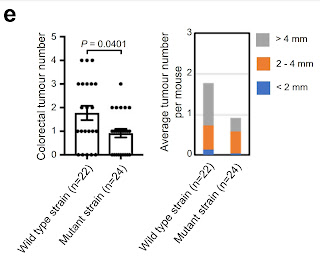
In the last few posts , I have focused on whether the main substance produced during a ketogenic diet,  β -hydroxybutyrate, could cause heart damage. The results are not clear, because the described mechanism should actually cause longevity. So something appears that is completely normal in nature, namely that SIRT7, which in principle has a very positive effect, can have a negative effect in some situations. But that is normal. The amount determines whether a substance will be a medicine or a poison, right? The same probably applies to butyrate, a short-chain fatty acid with four carbons, produced by intestinal bacteria. It seems that it can also be dangerous, it can cause colon cancer via cellular aging, senescence . Genetic removal of the ability of bacteria to produce butyrate (Mutant strain) leads to a reduction in the size and number of colorectal tumors in a mouse model of cancer. I found a study called " Gut bacteria identified in colorectal cancer patients promote tumouri...

SIRT7 - villain or key to longevity?

Image
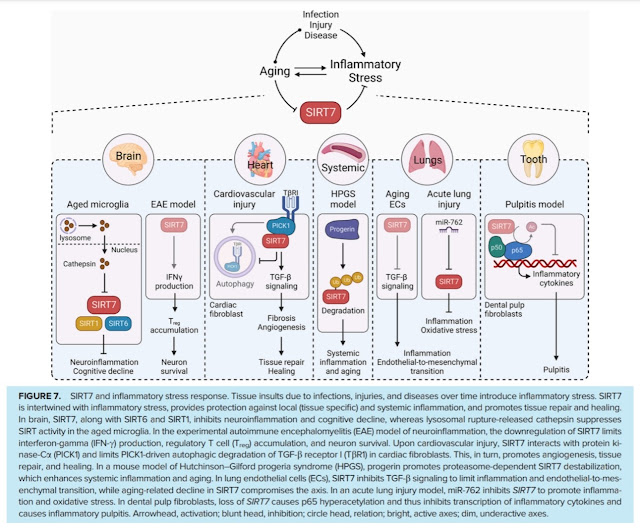
I am following up on a previous post in which a study indicating the possibility of heart damage with a ketogenic diet was mentioned. The result of the search for the cause was the finding that the ketogenic diet reduces the activity of histone deacetylase 2 (HDAC2), which controls the deacetylase SIRT7. So SIRT7 is activated, which is supposed to be the problem. I did some googling and found that SIRT7 activation seems to be generally very good.  For example, it suppresses (pseudo)hypoxia, i.e. chronic inflammation .  I found a number of studies that consider the activation of SIRT7 to be very beneficial, they are looking for different drugs that would activate SIRT7, but they do not tell us that it is β-hydroxybutyrate or even the short-chain fatty acids acetate/vinegar and butyrate that activate SIRT7 through HDAC2 suppression. All these substances are considered very beneficial. So we have a rather fundamental contradiction here. Does SIRT7 activation have positive or ne...

Does the ketogenic diet destroy the heart?

Image
The ketogenic diet is based on the strict restriction of carbohydrates in the diet, quite popular now. There are groups of people in the world who strongly promote the ketogenic diet as a cure for obesity, type 2 diabetes and other diseases. The very first known and documented therapeutic use of the ketogenic diet is for childhood epilepsy. Since then, the number of diagnoses suitable for the application of a ketogenic diet has greatly expanded. Therefore, it is highly desirable to investigate how the composition of fats affects the effectiveness, but mainly the safety, of this diet. The main component of the ketogenic diet is fat. And there are many different types of fats from different sources. Some can harm, others help. A ketogenic low-carbohydrate diet reduces body weight, MCT oils reduce the amount of adipose tissue, thus preserving more lean tissue. Recently, a number of studies have been published showing the potential danger of heart damage on the ketogenic diet. Let's lo...

What do lactate and fish oil have in common? They suppress obesity! Why?

Image
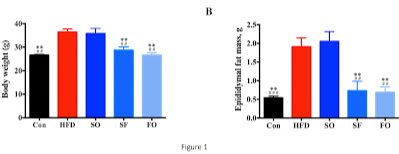
Lactate is a product of glucose fermentation, usually thought to cause muscle fatigue and problems, but probably not at all. Fish oil is known for containing a large amount of omega-3 fats, we will mainly be interested in the longest omega-3, i.e. DHA. What could these two substances have in common, that they suppress the development of obesity. Attention! Let's distinguish suppressing of obesity development from treatment, i.e. let's distinguish prevention of obesity from elimination of already existing obesity, these are two completely different disciplines ! Let's first look at the study with fish oil, i.e. with DHA . Here we have a mouse model study that includes four types of high fat diet. Control low-fat (Con, 10% fat), high-fat diet with lard (HFD, 60% fat), high-fat diet with lard and safflower oil (SO, 30%+30%), high-fat diet with lard and safflower oil and fish oil (SF , 30%+15%+15%), and finally a fatty diet with lard and fish oil (FO, 30%+30%). Fish oil (SF, FO...

How to increase the feeling of satiety and lose weight (theoretically)?

Image
I can't help myself, I have to theorize. In the previous post , we saw how easy it is to get fat, i.e. in the rat model. We also saw how to achieve weight loss again, feel free to take a look. It all follows from the fact that if we frequently change the macrobiotic ratios of the diet, i.e. the ratio of long-chain fats in relation to carbohydrates plus proteins together, the body cannot respond to the changes and derives the feeling of satiety from how quickly it fills the liver's glycogen reserves.  During the entire period of adaptation to the new food composition, the body will overeat.  The speed of adaptation of the metabolism to the new composition of the diet depends on the amount of short and medium fats in the food. The more of them the consumed fat contains, the faster the adaptation will take place. The lower will be the risk of overloading fat cells  (or rather their poisoning with endotoxin LPS from the digestive system )  and their probability of switch...