Protein restriction, FGF21, oxidative metabolism, and gluconeogenesis — is it related?
Some time ago I wrote about how, in one study, scientists found that when cells are exposed to glutamate/glutamine, oxidative metabolism in the cell is suppressed and replaced by a fermentative one. That one does not require oxygen. It does not use it even when oxygen is available, at its normal concentration. This is related to the release of ammonia molecules during deamination of excess glutamine for entry into the TCA cycle, that is, for its conversion into energy ATP.

In another post I wrote about how ammonia activates NMDA receptors, i.e., glutamate receptors. Turning them off using the substance MK-801 protects superoxide dismutase from damage, and excessive activation of NMDA receptors by glutamate and ammonia thus probably leads to cellular senescence. The main function of NMDA receptors, as I understand it, is to allow calcium ions to enter the cell and activate the cell to act. Typically, ROS production increases. The main role in this is played by NOS enzymes, which produce nitric oxide (NO). There are several types: nNOS in the nervous system, eNOS in the vascular endothelium. There are also calcium-independent variants, iNOS. The breakdown of glutamate accompanied by ammonia production can therefore also influence nitric oxide formation, and thus probably affects vasodilation and senescence of vascular endothelial cells.


Let us look at another post, where I described how the effects of insulin and nitric oxide on muscle cells differ. It is quite similar: both substances activate the formation of ATP molecules from glucose via glycolysis. However, they do not increase oxidative ATP production. Nitric oxide even suppresses oxidative phosphorylation. It thus promotes lactate production. This also corresponds to the fact that glutamate itself and its breakdown increase fermentative metabolism and lactate formation. Moreover, NO also suppresses protein synthesis.

Furthermore, we know that hydrogen sulfide produced as a product of sulfur amino acid metabolism by the enzyme CSE activates some enzymes via S-sulfhydration. This prevents their acetylation and nitrosylation. This usually increases their activity and supports oxidative metabolism. In this way it also activates the enzyme PC, the main activator of gluconeogenesis. An increase in H₂S production can paradoxically be achieved by restricting dietary sulfur amino acids.
How does this relate to the recent posts about the fact that restricting intake of non-essential amino acids and activating gluconeogenesis has the ability to correct fermentative metabolism and change it to oxidative?
I would see it roughly like this: pyruvate can be used either for oxidation to CO₂, for fermentation to lactate, or for carboxylation to oxaloacetate and then for the formation of the amino acid aspartate. The formation of aspartate thus consumes pyruvate without producing lactate, and moreover also consumes a nitrogen molecule that would otherwise be released as excess ammonia. That seems to me a sufficient reason why the synthesis of non-essential amino acids in the presence of excess essential ones can help preserve or even restore oxidative ATP energy production.
I would say this also corresponds to the fact that if we do not want to overeat, it is necessary to defend against excess glutamate, which may also mean the need to avoid foods with umami flavor. If glutamate is able to increase oxidative stress in the liver and brain, it leads to redistribution of calories toward storage. That is, unless the production of the hormone FGF21 is simultaneously activated, which allows this excess to be burned. FGF21 signals a lack of essential amino acids and helps with the safe disposal of non-essential ones.
This brings us to FGF21, a very interesting hormone that is produced in the liver during fasting. It seems that its production is somehow closely related to gluconeogenesis. It is interesting that this hormone affects not only the liver, but also the brain, adipose tissue, and apparently other tissues as well.

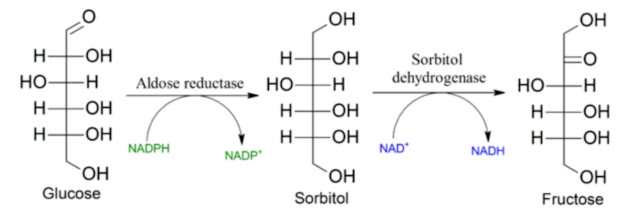
If expression of the gene for FGF21 production is genetically increased (FGF21-TG) even in the absence of food deficiency, then the gluconeogenesis pathway as well as fatty acid beta-oxidation, the TCA cycle, and ketogenesis are activated; even the PPP pathway and NADPH production for regeneration of reduced glutathione are more active. Burning is therefore promoted and liver glycogen stores are spared, but its formation is also slowed. The enzyme G6Pase is activated. As we already know, this is precisely what enables rapid phosphorylation of glucose, prevents fructose formation, and leads to lower glycogen production, that is the suppression of insulin resistance. But besides ketogenesis, the response to starvation is also suppressed; the changes can no longer be further increased. The question is whether to increase FGF21 activity in the presence of excess protein; perhaps it can help burn the excess, perhaps it also has other effects.

If, on the other hand, FGF21 production is permanently switched off (FGF21-KO), a low-carbohydrate/ketogenic diet stops working, fats will not be burned more efficiently, and it does not lead to weight loss. Fat burning is disrupted; ketone bodies simply are not formed. But neither is glucose formed by gluconeogenesis, nor is it released from glycogen. Metabolism during fasting is severely disrupted by this manipulation, so between meals.

One of the clear target enzymes of the hormone FGF21 with an immediate effect is precisely G6Pase, although this is probably not the only pathway. There apparently exists a parallel pathway activating G6Pase even without the presence of FGF21. From an older post we already know that some amino acids can do this. I have no evidence whether pyruvate carboxylase (PC) is also a target; it would be logical.
It still seems to me that activating gluconeogenesis by restricting intake of all proteins, possibly with supplementation of essential amino acids, could be a way to support oxidative metabolism. Alongside vinegar/acetate, which also apparently activates the PC enzyme and gluconeogenesis by increasing acetyl-CoA levels, this could be another method to compensate for the effect of fructose and omega-6 rich seed oils on metabolism. A method to suppress fermentation and restore oxidative metabolism (OxPhos). Especially after it was confirmed that the effects of a low-carb/ketogenic diet actually work even without ketogenesis, I would say that activating gluconeogenesis may be what helps to correct a metabolism that is not functioning properly.
A little extra to think about.
Restricting food intake to a time window along with a 30% calorie restriction leads to activation of fat synthesis in mice (CR+WT).

How does this affect daily activity and metabolism?

Surprisingly, by reversing the fuel preference. While with free access to food, glucose is the main fuel in the active phase of the day (night in the case of mice), with food restriction the fuel of the active phase of the day is fat. These fats are created and stored during the resting phase (day phase in the case of mice). Food restriction causes the body to live on glucose while resting and at the same time create and store fat for use in the active phase of the day, i.e. completely the opposite of unlimited intake! That's quite paradoxical, don't you think?
Do you still think that easy fat formation is bad?
References:
Integrated regulation of hepatic metabolism by fibroblast growth factor 21 (FGF21) in vivo
Ketogenesis is Dispensable for the Metabolic Adaptations to Caloric Restriction


your analysis of the comments on this video could be interesting https://www.youtube.com/shorts/JFe_QbqHYAg
ReplyDelete