How Does Linoleic Acid Shut Down Fat Metabolism in the Liver?
In the previous post, I showed how the omega-6 linoleic acid peroxidation product 4-hydroxy-2-nonenal (HNE) suppresses signaling of cellular energy deficiency, i.e., a shortage of ATP molecules. This forces the cell to switch into an energy-conserving metabolic mode, activate glucose fermentation or cellular senescence, or ultimately undergo apoptosis—programmed cell death.
Today, we will look at another older study (from 2014) in which researchers investigated whether fatty liver disease could be alleviated by suppressing the function of the AR enzyme, i.e., by inhibiting aldose reductase.
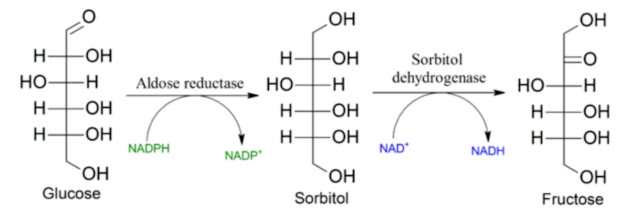
If you have not yet heard of aldose reductase (AR, also known as aldo-keto reductase AKR1B1), I have published a large number of posts on this blog presenting studies showing that AR activation is the basis of virtually all modern chronic diseases, whether it is obesity, liver damage, or vascular endothelial damage. Today, the main activators of AR are not only elevated blood glucose levels, as is often stated, but also aldehydes—specifically acetaldehyde and HNE. This is especially true when the activity of another enzyme, aldehyde dehydrogenase (ALDH2), is simultaneously impaired, for example by HNE itself or simply by aging, because ALDH2 is an unusually long protein (+40% longer than the median), and the synthesis of longer proteins becomes problematic with advancing age.
The authors induced liver pathology using a methionine- and choline-deficient diet (MCD diet). This diet impairs the export of fats from the liver to the rest of the body in the form of VLDL particles, causing lipids to accumulate in the liver and generate oxidative stress.
If cell membranes contain fatty acids that can undergo peroxidation to form aldehydes (e.g., linoleic acid or arachidonic acid), then they will inevitably undergo peroxidation, and these newly formed aldehydes derived from polyunsaturated fats will once again reliably activate AR.

Citation
"The molecular mechanisms involved in progression from liver steatosis to NASH remain unclear. However, oxidative stress is a possible candidate. 4-Hydroxynonenal (HNE) is a cytotoxic byproduct of lipid peroxidation that is hypothesized to participate in the pathogenesis of a number of diseases. In addition to glucose, AR can catalyze the reduction of a number of aldehydes and carbonyls, including HNE. Thus, AR has been postulated to serve a cyto-protective function by rapidly detoxifying aldehydes. In vitro studies have shown that AR expression is induced by 4HNE in rat vascular smooth muscle cells and that inhibition of AR sensitizes cells to 4HNE cytotoxicity.
However, AR inhibitors have also been reported to exert beneficial effects on injuries in a number of rodent models, including allergic airway inflammation, ischemic myocardial injury, arterial balloon injury and uveitis.”
End of citation
I believe the mechanism, as described here, is completely clear.
When AR function is suppressed with an AR inhibitor (ARI, Zopolrestat here), both oxidative stress and the amount of fat stored in the liver (triglycerides) are reduced.

This occurs through increased activity of the transcription factor PPARα, which is otherwise inhibited by phosphorylation (pPPARα-S21, pPPARα-S12). It is AR activity that causes phosphorylation of PPARα, a post-translational modification that prevents it from carrying out its normal function. As a result, hepatic fat metabolism through β-oxidation is suppressed, particularly during the fasting period between meals. This leads to a deficiency of acetyl-CoA molecules and reduced gluconeogenesis, which also results in impaired amino acid metabolism. In particular, sulfur-containing amino acids are no longer processed properly, and the resulting deficiency of H₂S leads to reduced activity of numerous enzymes. Administration of an AR inhibitor (ARI) partially restores normal metabolism.

It is not easy to identify and verify these long and complex regulatory pathways, but we know about them from other studies, which is why I consider it reasonable to apply them here as well. This allows me to connect different observed effects, place them into a broader context, and explain relationships that have so far remained unknown or appeared puzzling.

References:


Comments
Post a Comment